What Happens When You Call Our Emergency Line
Skylight emergencies do not wait for business hours. A branch comes through the glass at midnight. A summer storm drives rain sideways under old flashing. A March thaw pushes a wall of meltwater past an ice dam. When water is coming into the house, you need someone on the roof, not a callback tomorrow.
Our 24/7 line goes to a person. We talk you through protecting the room, dispatch the nearest crew and get the opening covered. Once the weather clears, we come back to do the permanent repair properly.
The 5 Skylight Emergencies We See Most
- Broken glass from branches during wind storms.
- Hail damage cracking outer panes.
- Storm leaks from wind-driven rain past old flashing.
- Ice dam surges during sudden thaws.
- Venting skylights stuck open when a motor or sensor fails in rain.
Residential Emergency Service
Broken Skylights Over Bedrooms
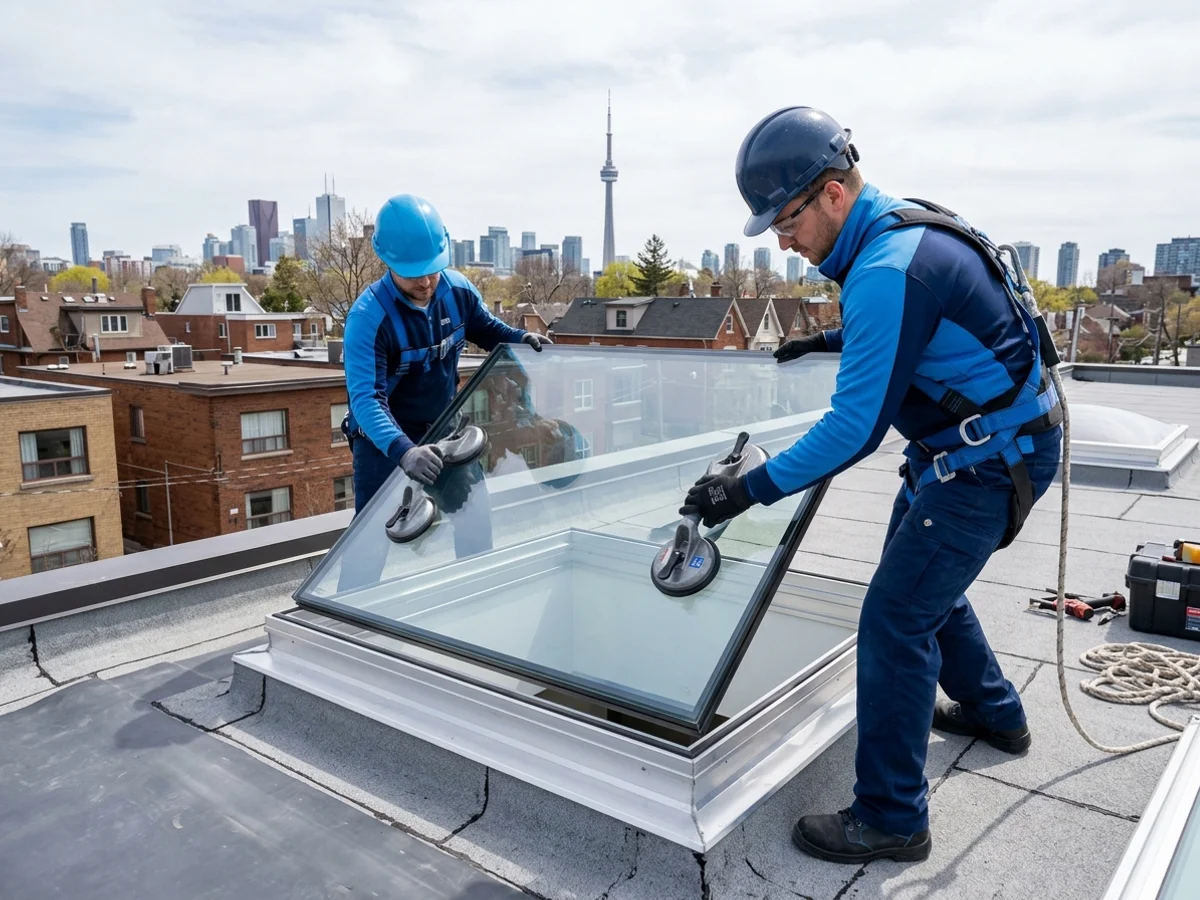
Laminated glass holds together; tempered glass does not. We board up either way, but knowing which is which matters for the insurance photo set and for the permanent glass replacement that follows. Our crews carry 3/4 inch plywood pre-cut to common skylight sizes so we can board the opening on the first trip.
Kitchen Leaks
Protect counters and appliances, then tarp. A leaking skylight over a kitchen will soak cabinetry and ruin flooring within hours, so we move what we can, hang poly sheeting and stop the water before the damage compounds. After the tarp is on, we come back in dry weather for the permanent repair or glass replacement.
Stairwell Leaks
Slip hazards on stairs get towels and barriers first. A wet stairwell is one of the most dangerous places in a house during a leak, so we lay towels and barriers on the steps the moment we walk in, then chase the water up to the ceiling. Honestly, fall injuries on stairs are how a small leak becomes a serious one.
Attic Leaks
Water travels on framing. We find it before it reaches drywall. By the time a leak shows at the ceiling it has usually been running along the top of a truss or the back of a rafter for hours, so we trace it from the opening back down before we close up. That trace goes into the insurance report.
Stuck-Open Venting Units
Manual close and temporary seal. A venting unit stuck open in rain is one of the most common emergency calls we get, because a failed motor or sensor will leave the sash open all night. We manually close it, run a temporary seal around the frame, and quote the motor or sensor repair once the weather clears.
Heritage Homes
Careful temporary protection on slate and copper. Heritage roofs in Rosedale, Forest Hill and Cabbagetown cannot be walked on like an asphalt roof, so our heritage-emergency approach uses foam padding, soft-soled boots and tarps weighted with sandbags rather than screwed down. A slipped slate in a storm is the kind of damage that hurts for years.
Commercial Emergency Service
Warehouses
Protect inventory with sheeting, seal the opening. A leaking skylight over a warehouse racking aisle will hit cardboard within minutes, so we lay 6 mil poly over the top tier of palletized goods before chasing the water. Inventory protection is itemized on the callout, since most adjusters want to see it separately.
Retail
Get the store open in the morning. Retail emergency calls almost always run overnight or before opening so the doors open on time, with interior sheeting taken down and bagged before staff arrive. We have done Queen Street East and Danforth storefront skylight calls that way for years.
Offices
Protect electronics and work areas. Office emergency calls usually mean a server room or workstation cluster is in the splash zone, so we move what we can and drape what we cannot before chasing the water up. IT and facilities get a photo set right after we secure the opening.
Restaurants
Make the dining room usable again fast. Restaurant emergency calls run between services so we can seal the opening, hang plastic and clean the floor before the next seating. Our Oakville restaurant call came in on a Saturday lunch and was back to dinner with a $950 weekend callout.
Specialty Emergency Measures
Emergency Tarping
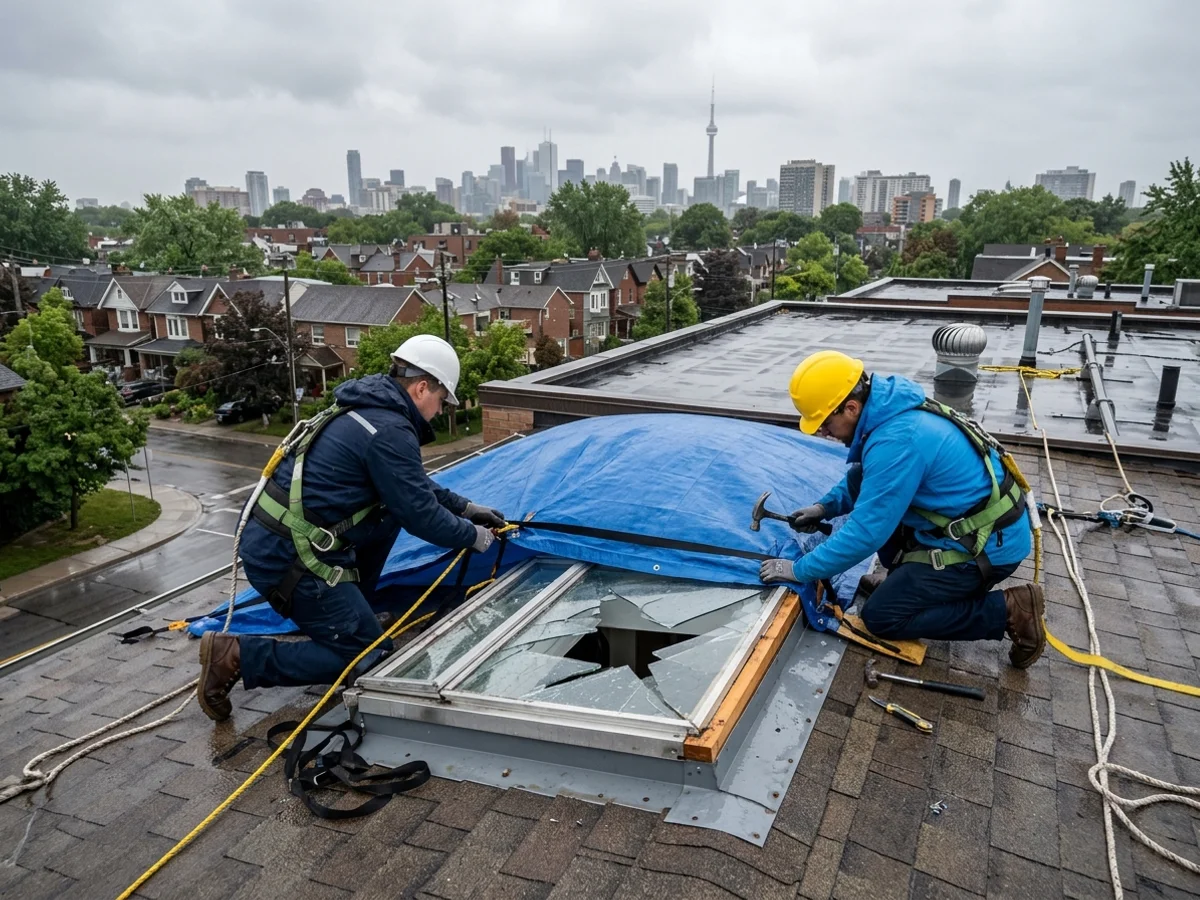
Secured and weighted to survive wind. A tarp on a skylight has to survive the rest of the storm and the next one, so we anchor with sandbags, batten strips and a perimeter wrap rather than a few nails. Most of our tarps stay on until the permanent repair, which can be days or weeks later.
Plywood Board-Up
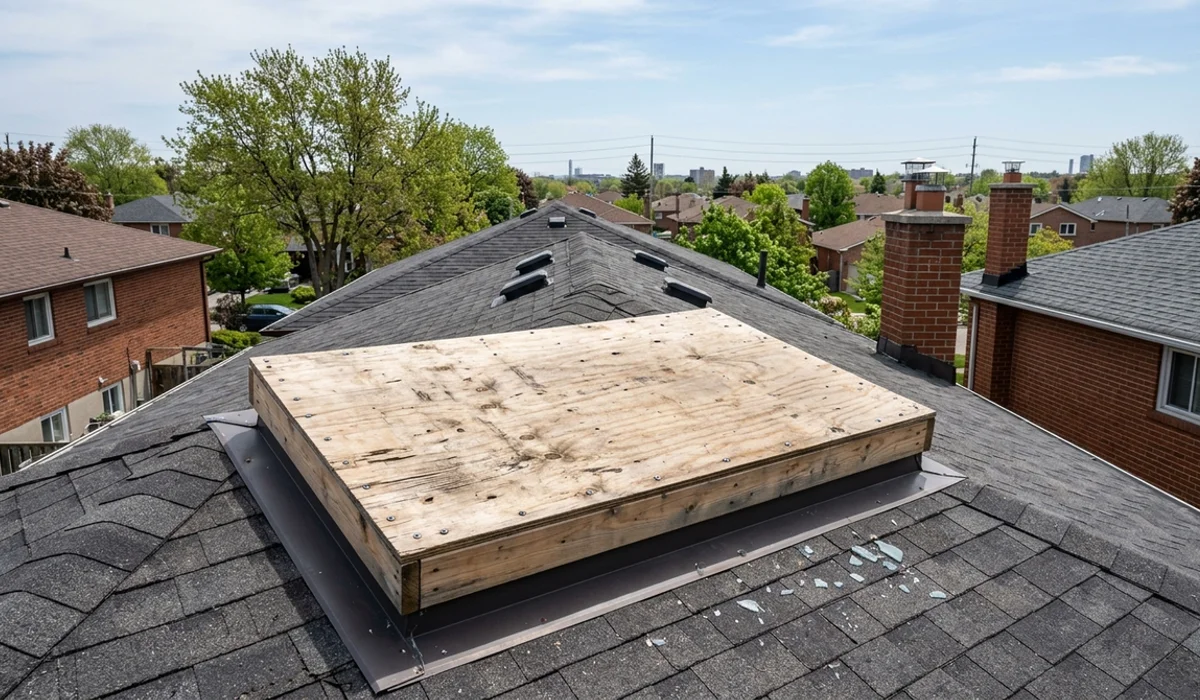
For broken glass. 3/4 inch plywood screwed into the curb frame around the broken pane, fastened every 6 inches so the next wind gust does not peel it. Our crews carry pre-cut plywood for common Velux and Fakro sizes, which means a faster boarding and a tidier finish than improvised lumber.
Temporary Membrane Seals
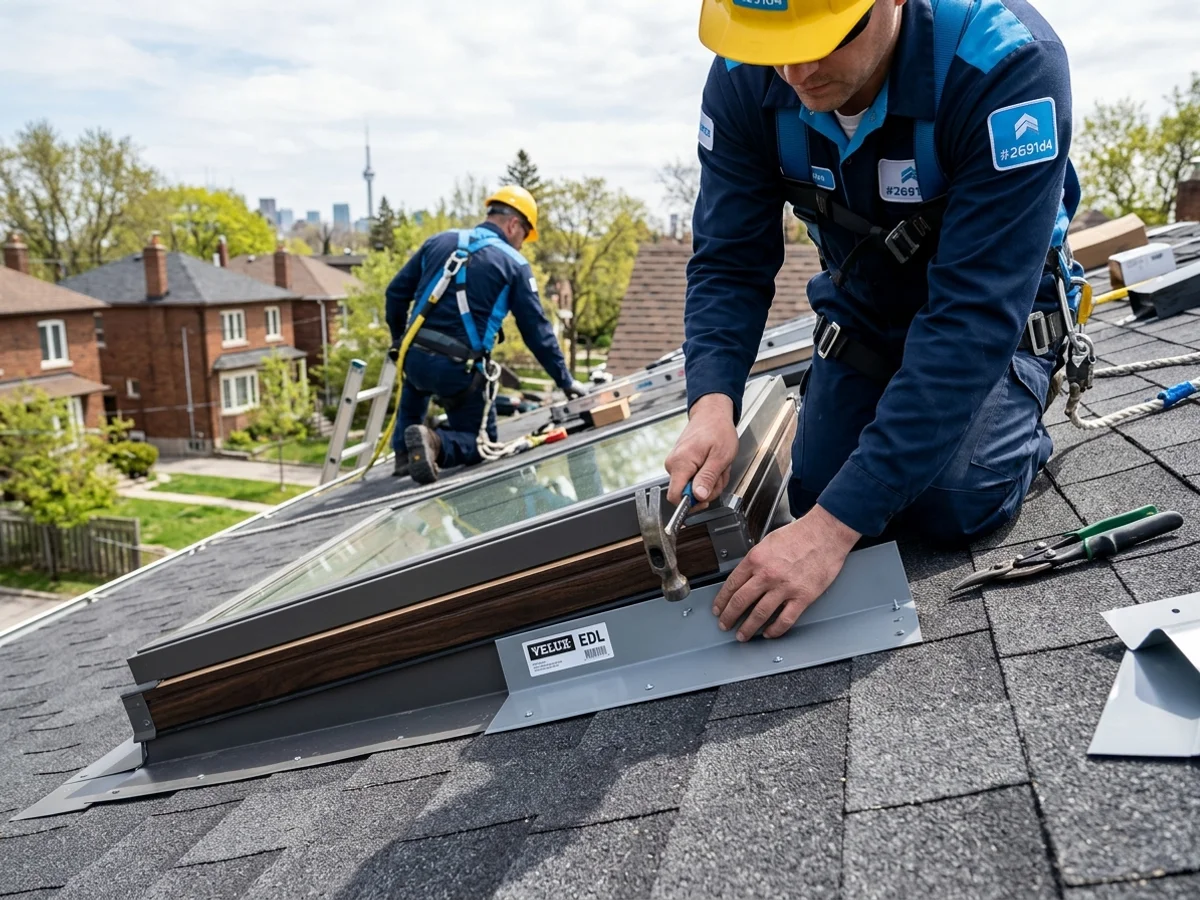
Self-adhering membrane over failed flashing. Grace Ice & Water Shield or similar membrane applied over the failed flashing detail to bridge the leak until a permanent re-flash can be done in dry weather. This is the right call when wind has lifted or torn old flashing and a tarp would not seal properly to the curb.
Insurance Documentation
Timestamped photos and a written report. Photos are time-stamped from the camera metadata and emailed to you before we leave the site, and a written contractor report follows within 24 hours. Adjusters consistently tell us this is the documentation package that moves a claim along fastest.
Emergency Materials
| Situation | What we bring |
|---|---|
| Broken glass | Plywood, fasteners, tarp |
| Active leak | Self-adhering membrane, tarp, sandbags |
| Interior protection | Poly sheeting, drop sheets, buckets |
| Documentation | Photos, measurements, written report |
Our Emergency Expertise
Twenty years of storm calls across the GTA means our crews know how to secure a skylight quickly and safely. Laminated vs tempered breakage, wet roof safety, where meltwater really comes from. And we never use an emergency to upsell.
What Actually Stops People From Calling at 2 AM
“It can wait until morning.”
In our opinion, if water is reaching drywall or light fixtures, it cannot. A night of water does more damage than the callout costs, both in materials and in mould risk once drywall stays wet past 48 hours. We talk through the trade-offs on the phone so you can decide whether to call us now or in the morning.
“Emergency rates must be outrageous.”
Ours are published: $650 to $1,200 plus $150/hr after hours. The published price is what you pay, no surge multiplier when the rain is heavy and the calls are coming in. We quote the callout and the hourly rate on the phone before we dispatch.
“They’ll push a whole new skylight.”
We secure it now and quote the right repair later. Honestly, upselling a full replacement on a callout is the kind of move that makes homeowners stop trusting the trade, and we never use an emergency to push a sale. The right repair, quoted properly, is how you earn the next call.
“I’ll just put a bucket under it.”
Buckets catch drips, not the water inside your ceiling. By the time water shows in the bucket it has already soaked the back of drywall and pooled on the vapour barrier, so a bucket is a pressure relief, not a fix. The opening still needs to be sealed before the next round of weather.
Emergency Timeline
The Call
Advice on the phone right away. Tell us what you see and we will tell you what to do with buckets, towels and circuit breakers until we arrive. The phone advice is free, no hourly rate and no obligation to use us after.
Dispatch
We dispatch the nearest crew, not the next free slot, and most GTA calls have a truck on site within about two hours. Weather and road conditions affect that number, and we tell you on the phone what to expect for your address.
Secure
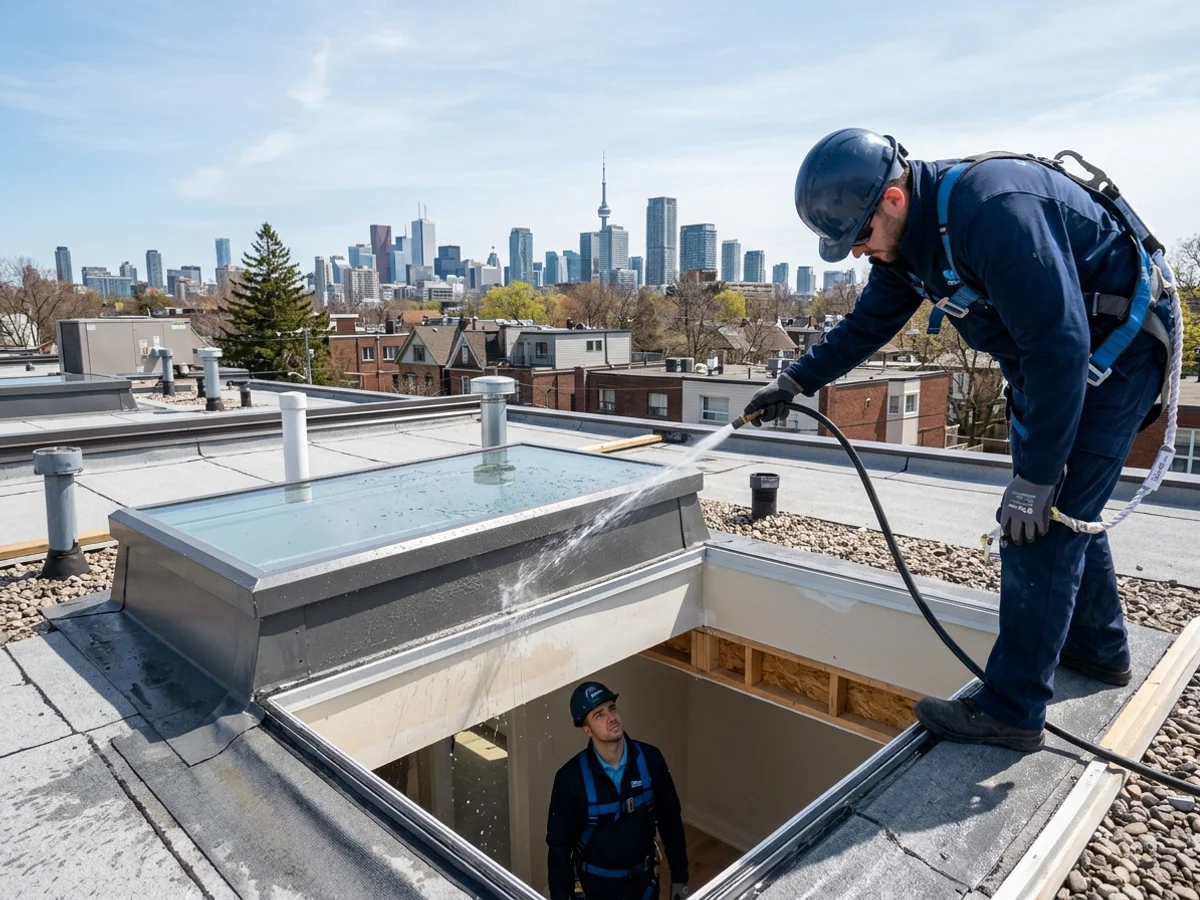
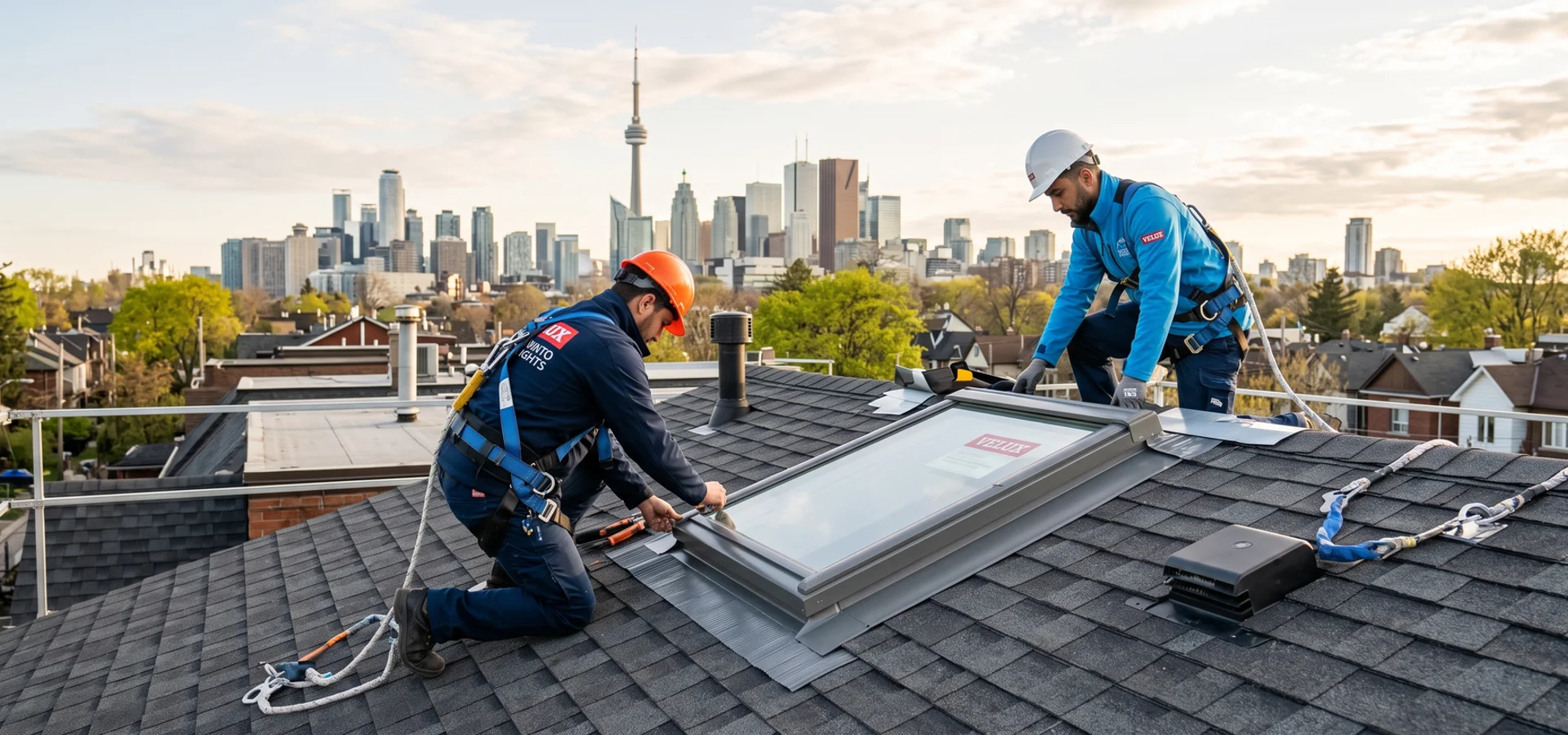
Tarp, board-up or temporary seal, then photo-document the damage for your insurer. Our crews are trained for working at heights and carry fall protection, so we work safely on a wet roof and still get the opening closed before we leave.
Permanent Repair
Quoted within days, done when weather allows. Once the roof is dry and the right glass or flashing is in hand, our crew comes back at normal rates rather than emergency rates. A weekend emergency callout of $950 for a Thornhill leak turned into a $1,400 re-flash the following Wednesday.
Emergency Skylight Cost in Toronto: What You Are Paying For
Callout Fee
$650 to $1,200 after hours, $750 to $1,500 weekends and holidays. The published rate is what you pay, no surge pricing, no fuel surcharge, and the callout fee is quoted on the phone before dispatch. Some contractors gouge in emergencies; we do not.
Hourly Time
$150/hr after the first hour on site. The first hour is included in the callout, so a 90-minute tarp and photo set is just the callout fee with no hourly charge. Hourly time kicks in for complicated multi-unit or heritage-roof situations.
Materials
Tarps, plywood, membrane. Materials are itemized at cost plus a small handling fee, so a $1,200 weekend callout with $80 in tarp and plywood shows you exactly where the rest of the money went. We do not hide materials inside the hourly rate.
Interior Protection
Sheeting and clean-up. We hang 6 mil poly, lay drop sheets, move what we can and clean up the buckets and towels before we leave. The point of an emergency call is to leave the home in better shape than we found it, not just drier.
Documentation
Photos and report for insurance. Time-stamped photos go to you before we leave the site, and a written contractor report follows within a day. Adjusters tell us this is the documentation package that moves a claim along fastest.
Permanent Repair
Separate quote, normal rates. Once the roof is dry we come back for the proper re-flash, glass replacement or curb rebuild at standard rates rather than emergency rates. That separation is what keeps the callout from ballooning into the permanent repair bill.
Emergency Service vs Leak Repair vs Replacement: Which Service You Need
Water coming in now: emergency service. Slow drip you have seen for weeks: leak repair. Old unit that keeps failing: replacement.
Fixed, Venting or Solar: Choosing Your Skylight Type
If your skylight is destroyed and needs replacement, choose a solar Velux VSS with a rain sensor to avoid stuck-open emergencies in future.
Emergency Repair Timeline in Toronto: What to Expect Week-by-Week
Secured the same night, permanent repair quoted within two to three days and completed within one to two weeks depending on parts.
Why GTA Homeowners Keep Our Number on the Fridge
A real person answers, a real crew shows up and the price is published. We have been doing this across Toronto, Scarborough, Etobicoke and the wider GTA for over twenty years, certified for both Velux and Fakro since 2004 and more than 2,000 installs in. Every crew is in-house and WSIB-covered, no subcontractors at your door at 2 am, and every callout is quoted on the phone with the rate published up front. OBC 9.7 for fenestration, OBC 9.26 for roofing and a written lifetime leak-free flashing warranty are the things you are actually paying for. Trust us, you’re in good hands, everytime it storms.